 Save to Pinterest
 There's something almost meditative about rolling nori by hand, watching the seaweed hug vegetables in a tight spiral. My roommate brought home a bamboo mat one afternoon, convinced we could save money making our own rolls instead of ordering takeout, and I was skeptical until I tasted the difference—that snap of the cucumber, the way the avocado stayed creamy because it wasn't sitting in a container for an hour. Now it's become this quiet ritual, especially on days when I need something fresh and straightforward without turning on the stove.
I made these for a potluck once, bringing them in a bento box, and watched people pick them up expecting something heavier and then visibly relax when they realized how light they were. Someone asked if I'd studied sushi-making somewhere, which made me laugh because I'd just watched a five-minute video that morning. It became a standing request after that—apparently homemade nori rolls hit different when you can see exactly what's inside them.
Ingredients
- Nori sheets: These roasted seaweed wrappers are the star, holding everything together with a subtle mineral flavor that frames the vegetables—buy the ones labeled specifically for sushi rolling, as they're more pliable.
- Cucumber: Cut into thin matchsticks so they stay crisp even after rolling, and use one that feels firm, not soft or watery.
- Avocado: Slice it just before rolling to prevent browning, and pick one that yields gently to pressure but doesn't squish.
- Mixed sprouts: The crunchy heart of each roll—whichever variety you choose brings its own peppery or earthy note.
- Carrot and bell pepper: These add color and a subtle sweetness that balances the umami from the nori.
- Sushi rice (optional): If you're using it, the rice vinegar awakens the grains and keeps them from tasting plain, though you can skip it entirely for a lower-carb version.
- Soy sauce or tamari: Your dipping companion—tamari is gluten-free if that matters to you.
- Toasted sesame seeds: A small shower of these adds nutty depth and texture.
- Pickled ginger and wasabi: Keep these on hand if you like heat and palate-cleansing sharpness between bites.
Tired of Takeout? 🥡
Get 10 meals you can make faster than delivery arrives. Seriously.
One email. No spam. Unsubscribe anytime.
Instructions
- Prepare your rice if you're using it:
- Mix the cooked sushi rice with rice vinegar while it's still warm so the grains absorb that subtle tang, then let it cool completely. This takes maybe five minutes and makes all the difference in flavor.
- Set up your rolling station:
- Lay your bamboo mat on a clean counter with the slats running horizontally, then place a nori sheet shiny side down on top. If you don't have a mat, a damp kitchen towel works just as well—I've done this a hundred times without fancy equipment.
- Apply rice if using:
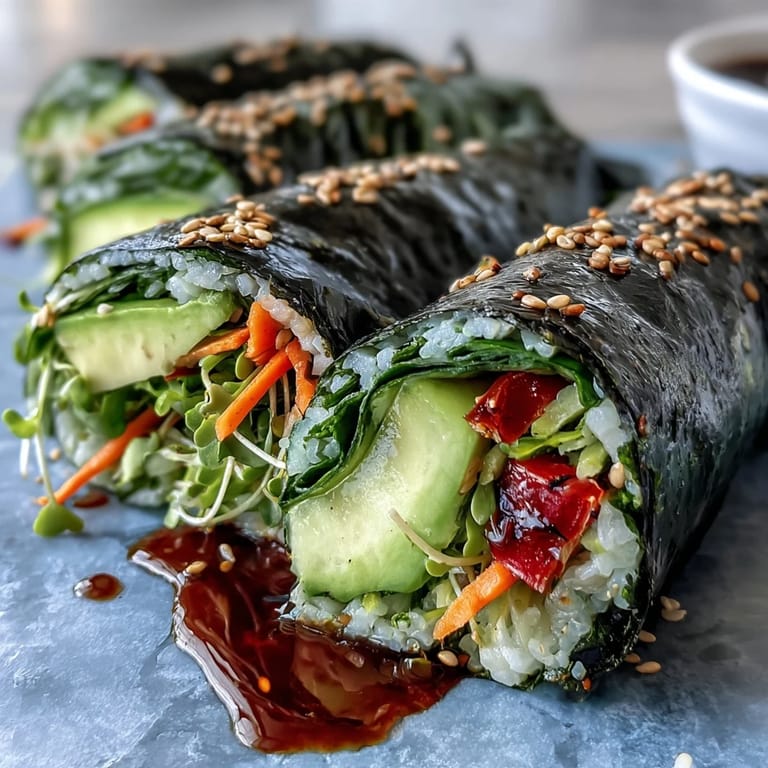
- Dip your fingers in water and spread a thin layer of rice across the lower third of the nori, leaving about two centimeters bare at the top so you have room to seal it. Don't press too hard or you'll squish the grains into a paste.
- Layer your vegetables:
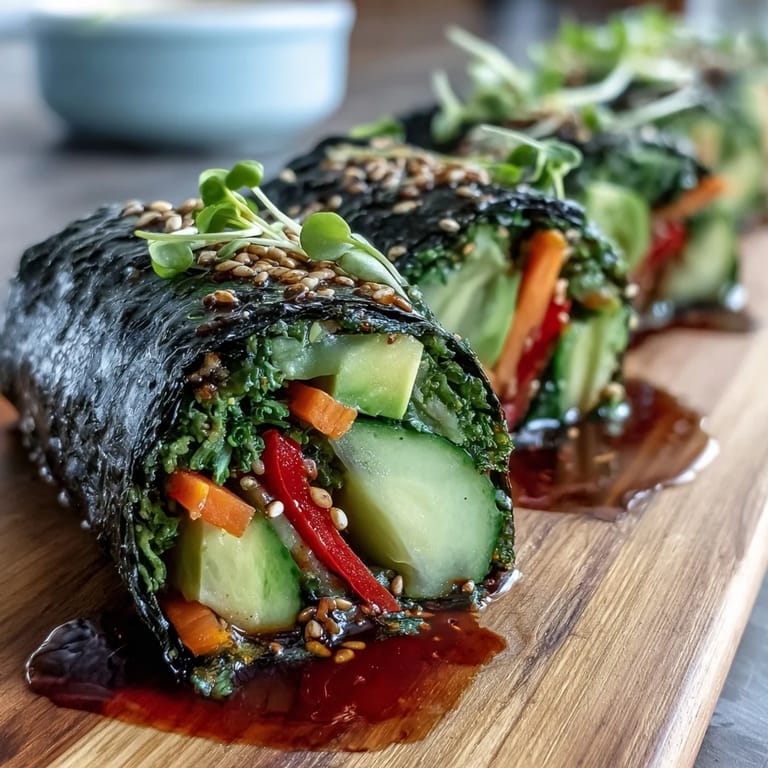
- Arrange a line of cucumber, avocado, sprouts, carrot, and bell pepper across the rice, keeping the pile snug but not so packed that it bursts when you roll. Sprinkle sesame seeds over the top like you're seasoning something you care about.
- Roll with gentle pressure:
- Using the edge of the mat closest to you, fold it over the fillings and start rolling away from you, using the mat to keep everything tight. When you reach the top edge, seal it with a dab of water on your finger so the nori sticks to itself.
- Slice with intention:
- Use a very sharp knife dipped in water for each cut—the wet blade glides through without crushing the rolls and keeps the nori from tearing. Wipe the blade between cuts if it starts to stick.
- Serve and savor:
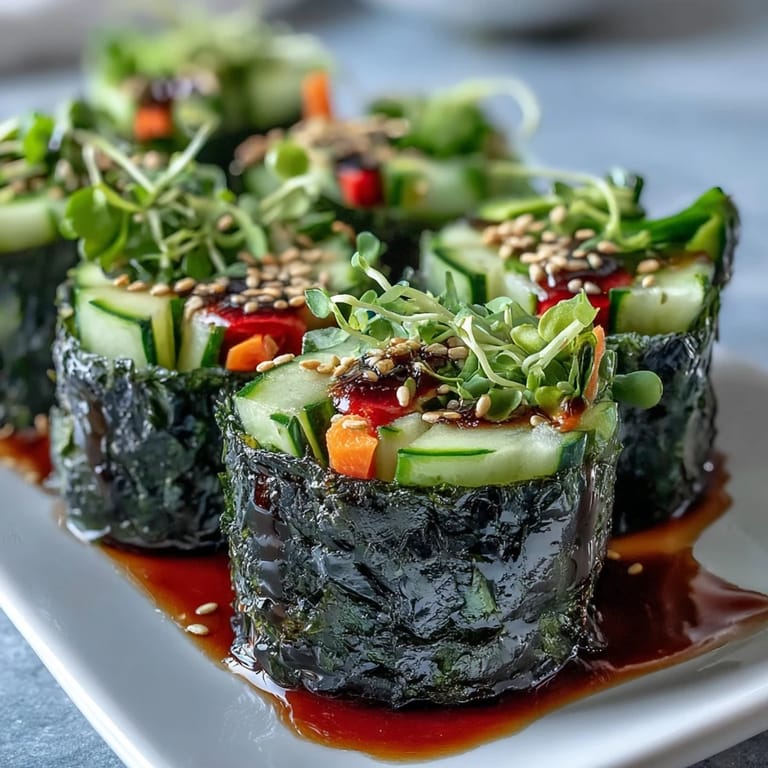
- Arrange the sliced rolls on a plate and set out your dipping sauces, pickled ginger, and wasabi so everyone can customize their bite.
 Save to Pinterest
 There was this moment when my nephew, who usually won't eat vegetables, picked up a roll and asked if he made it, could he eat it? He helped me assemble the next batch, carefully placing cucumber sticks in a line, and suddenly greens didn't feel like something being forced on him. Sometimes the best part of a recipe isn't the eating, it's the small permission it gives someone to be curious.
Why Rice Is Optional
The original instruction includes sushi rice as optional, and that's genuinely the move if you want something lighter or lower-carb. I've made these both ways depending on my mood—with rice they feel more substantial and traditional, without rice they're almost a vegetable wrap that lets each ingredient shine individually. The nori holds everything together perfectly fine on its own, and you get closer to tasting the actual vegetables instead of the sticky backdrop they sometimes get lost in.
Building Your Own Flavor Story
What I've learned is that nori rolls are genuinely forgiving once you understand the basic structure. You could add marinated mushrooms for earthiness, thin slices of tofu if you want protein, or even fresh mint and cilantro if you're feeling adventurous. The vegetables I've listed are classic for a reason—they balance texture, flavor, and visual appeal—but they're more like a template than a law you have to follow.
Making This a Meal
Four rolls with vegetables feels light, which is part of their charm, but if you're serving these as a main course rather than an appetizer, pair them with a simple side salad dressed in sesame vinaigrette, or serve alongside miso soup if you want something warm. The beauty of rolls is they work as part of a spread—alongside edamame, cucumber salad, or even some quick-pickled vegetables you made last week. They're flexible enough to fit whatever else you're hungry for.
- A crisp white wine or green tea is genuinely the perfect pairing—something light enough not to overshadow the fresh vegetables.
- Make your rolls a few hours ahead if you need to, and keep them wrapped in plastic or stored in an airtight container so they don't dry out.
- If the nori feels soft after sitting, it's not ruined, just slightly less snappy—this is texture preference, not a failure.
 Save to Pinterest
 These rolls taught me that sometimes the best recipes are the ones that don't require you to become someone you're not in the kitchen. You just need vegetables you like, something to hold them together, and about twenty minutes to turn them into something people actually want to eat.
Recipe Questions & Answers
- → Do I need a bamboo rolling mat?
A bamboo mat helps create tight, uniform rolls, but a clean kitchen towel works just as well. The key is applying gentle, even pressure as you roll to prevent fillings from spilling out the sides.
- → Can I make these ahead of time?
These are best enjoyed immediately after rolling to maintain the crisp vegetable texture. If preparing in advance, wrap each roll tightly in plastic wrap and store at room temperature for up to 2 hours before serving.
- → What vegetables work best in nori rolls?
Julienned vegetables with crunch hold up beautifully—try cucumber, carrot, bell pepper, radishes, or daikon. Leafy greens like spinach or shaved cabbage also add texture and color contrast.
- → How do I keep the nori from getting soggy?
Pat vegetables dry before rolling and avoid overfilling. If including rice, spread it thinly and let it cool completely. Serve immediately after slicing for the best texture and flavor.
- → What dipping sauces pair well?
Classic soy sauce or tamari provides salty contrast. Try ponzu for citrus brightness, spicy mayo for creaminess, or a simple mixture of rice vinegar and sesame oil for a lighter finish.