 Save to Pinterest
 My neighbor dropped off a bundle of Japanese eggplants from her garden one summer evening, and I stood there holding them like I'd been handed something precious. That night, I remembered a small izakaya in Tokyo where I'd ordered a similar dish without thinking much of it, but the way that glossy miso coating caught the light stayed with me. Twenty minutes later, my kitchen smelled like caramelizing umami, and I understood why she'd grown them so carefully.
I made this for a dinner party where someone mentioned they'd never had Japanese eggplant before, and watching their face when they tasted it—that moment of surprise when umami hits unexpectedly—made me realize how a simple vegetable could shift the whole mood of a meal. We ended up talking through the rest of dinner about how food carries memory and place, and honestly, that conversation mattered more than any recipe ever could.
Ingredients
- Japanese eggplants: These are thinner and less bitter than their globe cousins, with tender flesh that practically melts when roasted. Choose ones that feel firm but give slightly to pressure.
- White miso paste: This is the sweet, approachable miso that doesn't overpower—it brings umami and a gentle fermented depth. Keep it sealed in the fridge once opened, and don't skip it for anything else.
- Mirin: The subtle sweetness here comes from mirin's natural sugars, which also help the glaze caramelize beautifully under the broiler. If you can't find it, a mix of sugar and a splash of water works in a pinch, though you'll lose a layer of complexity.
- Sake: Just a tablespoon adds a dry elegance that keeps the glaze from becoming cloying. It also helps thin the miso into a brushable consistency.
- Sugar: This balances the miso's saltiness and helps create that caramelized finish you're after.
- Sesame oil: Use the toasted kind for maximum flavor—it's the secret ingredient that makes everything taste more intentional and rich.
- Toasted sesame seeds: These add a nutty crunch and visual warmth right at the end, like a small celebration on top.
- Green onions: A bright, fresh finish that cuts through the richness and brings everything back to balance.
Tired of Takeout? 🥡
Get 10 meals you can make faster than delivery arrives. Seriously.
One email. No spam. Unsubscribe anytime.
Instructions
- Get your oven ready and prep your surface:
- Preheat to 400°F and line a baking sheet with parchment paper so cleanup becomes a non-event and nothing sticks.
- Prepare the eggplants:
- Slice them in half lengthwise, then take a sharp knife and score the flesh in a gentle crosshatch pattern—you're aiming to let heat and seasonings penetrate without cutting all the way through to the skin. This is where patience pays off.
- Season and start roasting:
- Brush the cut sides with a light coating of sesame oil, place them cut-side up on your sheet, and slide them into the oven. They'll need 20 to 25 minutes until the flesh turns golden and tender—you should be able to pierce it easily with a fork.
- Build the glaze while they roast:
- In a small bowl, whisk together the white miso, mirin, sake, sugar, and remaining sesame oil until you have a smooth, spreadable consistency. There shouldn't be any lumps of miso—take a moment to really work it together.
- Glaze and finish:
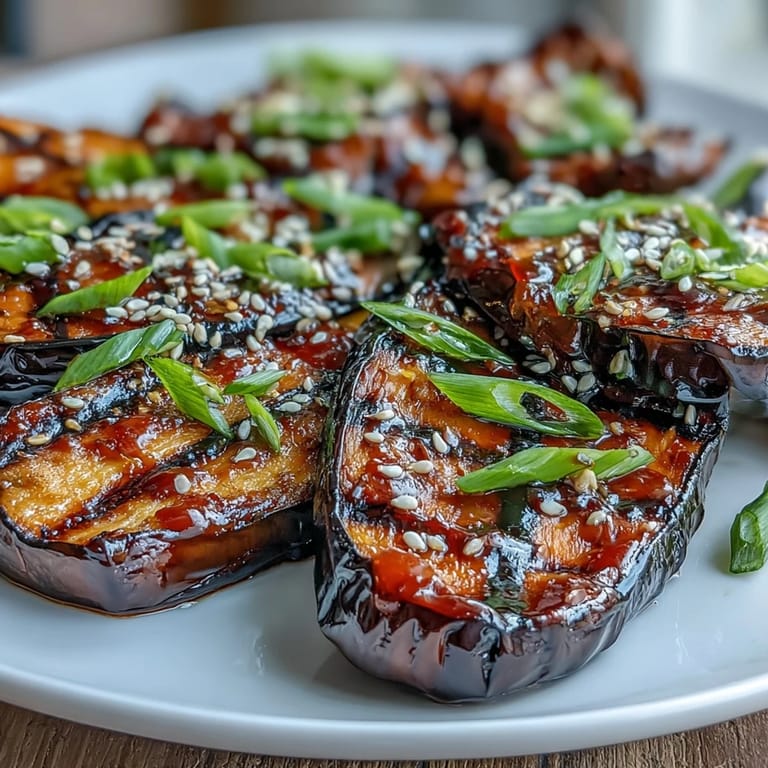
- Once the eggplants come out of the oven, spread a generous layer of miso glaze over each cut side. Switch your oven to broil, slide them back in, and watch closely for 2 to 3 minutes—you're waiting for the glaze to bubble and turn a caramelized brown, which happens faster than you think.
- Garnish and serve:
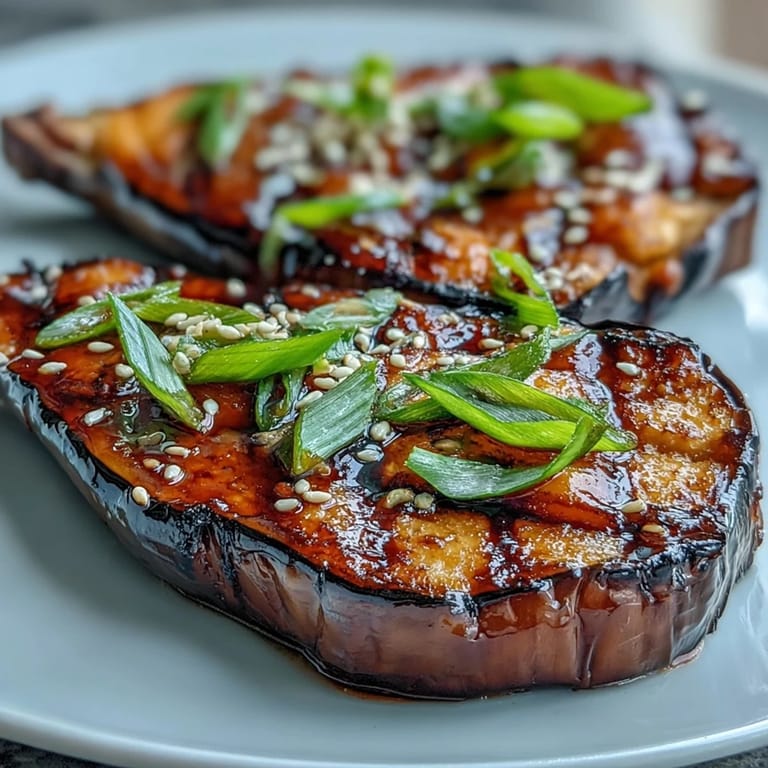
- Pull them out before they burn, then shower them with toasted sesame seeds and sliced green onions while they're still warm. The heat will make the aromatics bloom.
 Save to Pinterest
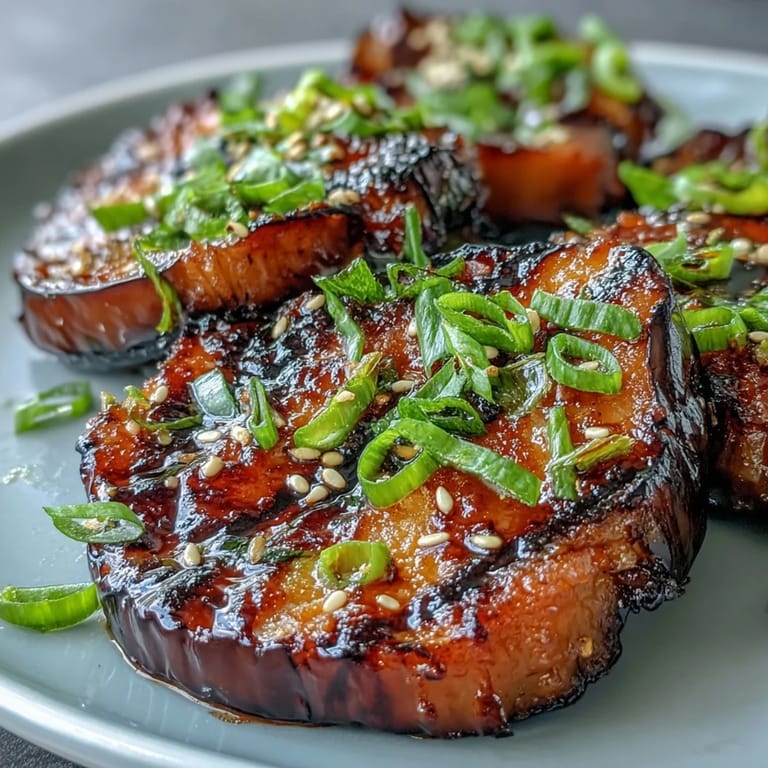
 There's something quiet and meditative about sliding a roasted eggplant onto a plate and seeing that glossy miso glaze catch the light, knowing you made something that tastes like it came from somewhere far away and special. That's the magic of this dish—it's humble enough for a Tuesday night but feels like a small gift every time.
The Miso Glaze Magic
The real revelation here is how white miso transforms under heat. When you first mix it together, it tastes bright and slightly salty, almost sharp. But brush it onto warm eggplant and run it under the broiler, and something shifts—the sugars caramelize, the fermented notes deepen, and suddenly you've got this complex, glossy coating that tastes like it contains the whole history of Japanese fermentation. I spent an embarrassing amount of time just staring at it bubbling, honestly.
Serving and Pairing
This eggplant is flexible enough to work alongside almost anything—a bowl of steamed rice turns it into a simple, satisfying meal, while it's equally at home on a plate with other small Japanese sides. I've served it at room temperature as part of a picnic spread, warm as a vegetable course, and even chopped up and mixed into rice the next day. The beauty is that it doesn't demand much, but it never goes unnoticed.
Storage and Make-Ahead Tips
You can roast the eggplant halves a few hours ahead and store them in a covered container, then apply the glaze and broil just before serving—this takes pressure off if you're cooking for guests. The leftovers keep for three days in the fridge and taste wonderful cold or gently warmed through, though honestly, there usually aren't any.
- Make the miso glaze up to a day ahead and store it in a small jar; it actually develops more flavor as it sits.
- If you're cooking for one or two people, this recipe scales down easily—just use one eggplant and halve the glaze.
- Don't skip the toasted sesame seeds at the very end; they're what makes people pause mid-bite and ask what that texture is.
 Save to Pinterest
 This dish reminds me why I cook at all—those moments when something simple becomes memorable just because you paid attention. Make it, share it, and watch what happens.
Recipe Questions & Answers
- → Can I use regular eggplant instead of Japanese?
Yes, though Japanese eggplants have thinner skin and a more delicate texture. If using regular globe eggplants, slice into thicker rounds and adjust roasting time by 5-10 minutes longer.
- → What can I substitute for mirin and sake?
Dry sherry or Chinese rice wine can replace sake. For mirin, mix equal parts honey and water, or use a splash of sweet white wine with a pinch of sugar.
- → How do I store leftovers?
Keep in an airtight container in the refrigerator for up to 3 days. Reheat gently in a 350°F oven for 10 minutes to maintain texture, as microwaving may make the eggplant rubbery.
- → Is this dish gluten-free?
Traditional miso, sake, and mirin may contain gluten. Look for certified gluten-free versions of all three ingredients to make this completely gluten-free.
- → Why score the eggplant flesh?
Scoring creates more surface area for the glaze to penetrate and helps the heat circulate evenly, ensuring the flesh becomes tender throughout rather than staying firm in the center.