 Save to Pinterest
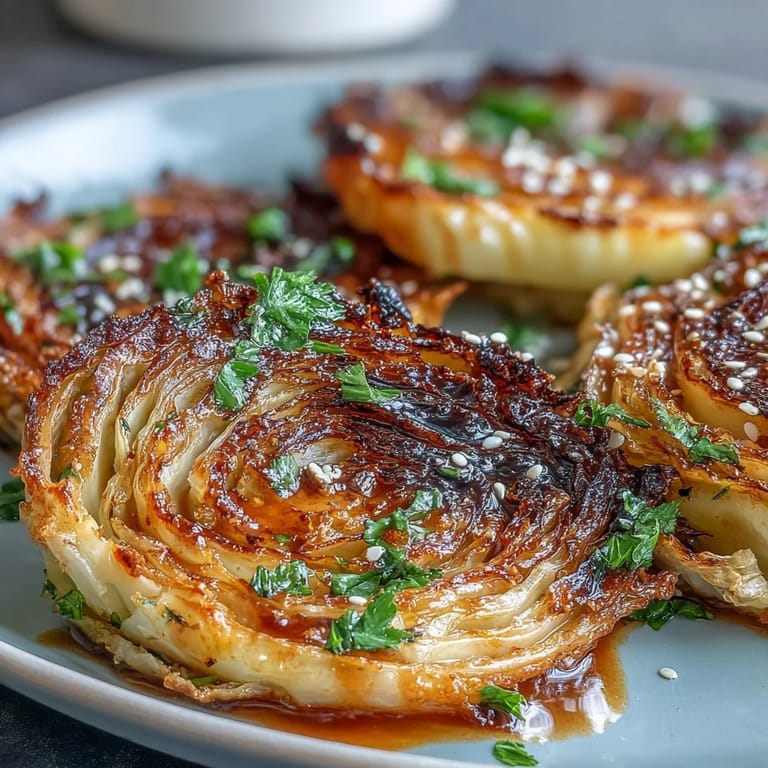
 There's something almost magical about watching a humble head of cabbage transform under high heat. I was skeptical the first time someone served me cabbage steaks at a dinner party, expecting something forgettable, but the caramelized edges and that creamy tahini sauce changed my mind entirely. Now I find myself making them on random Tuesday evenings just because the smell of roasting spices fills my kitchen with warmth. It's become one of those dishes that feels both simple enough for a weeknight and elegant enough to impress.
I served these to my sister last summer when she was experimenting with plant-based eating, and she asked for the recipe before she'd even finished her plate. The way the lemon juice hit her nose as I drizzled the tahini, the slight crunch of sesame seeds—it felt like I'd discovered a shortcut to something restaurant-quality in my own kitchen. Since then, it's become our go-to dish when we want something that tastes special without requiring hours of prep.
Ingredients
- 1 large green cabbage: Look for a head that feels heavy and compact, with tightly packed leaves—this ensures thick, sturdy steaks that won't fall apart during roasting.
- 3 tbsp olive oil: Use a good quality extra virgin oil if you have it; the oil is what creates those golden, caramelized edges that make this dish sing.
- 1 tsp ground cumin and 1 tsp smoked paprika: These spices are the quiet backbone of the dish, adding warmth and a subtle smokiness that complements the natural sweetness of the roasted cabbage.
- ½ tsp garlic powder, salt, and freshly ground black pepper: Don't skip the fresh pepper—pre-ground loses its punch, and you need that pep to balance the richness of the tahini.
- ⅓ cup tahini: Invest in good tahini if you can; cheap versions taste bitter, while quality tahini is creamy and almost nutty.
- 2 tbsp freshly squeezed lemon juice: Fresh lemon is non-negotiable here—bottled juice tastes metallic and won't brighten the sauce the way it should.
- 1 small garlic clove, finely minced: Go easy on the garlic or it'll overpower the delicate tahini; one small clove is usually just right.
- 2–4 tbsp cold water: Add it gradually—tahini can seize up suddenly, and cold water helps you get that perfect pourable consistency.
- 2 tbsp chopped fresh parsley and 2 tbsp toasted sesame seeds: These finish the dish with color and texture; toast your own sesame seeds if possible for a fresher, nuttier flavor.
Tired of Takeout? 🥡
Get 10 meals you can make faster than delivery arrives. Seriously.
One email. No spam. Unsubscribe anytime.
Instructions
- Get your oven ready and prep the cabbage:
- Preheat to 425°F and line your baking sheet with parchment paper. Peel away any yellowed or bruised outer leaves from the cabbage, then slice it straight down into 1-inch thick rounds—you'll get 4 to 5 good steaks from a large head. The thickness matters because thin slices will dry out while thick ones stay tender inside.
- Season and oil those steaks:
- Lay the cabbage slices flat on your sheet, brush both sides generously with olive oil, then sprinkle the cumin, paprika, garlic powder, salt, and pepper evenly across each one. Take a moment to make sure every side gets seasoned—the oil helps the spices stick and creates that caramelized crust.
- Let them roast and turn:
- Slide the pan into the oven for about 25 to 30 minutes, flipping the steaks halfway through. You're looking for deep golden and slightly charred edges with a center that yields gently when you press it—that's when you know they're done. The kitchen will smell incredible, and that's your sign it's working.
- Make the tahini magic while they cook:
- While the cabbage is roasting, whisk tahini with lemon juice, minced garlic, and a pinch of salt in a bowl. Add your cold water one tablespoon at a time, whisking constantly, until it reaches that pourable, luxurious consistency—it should drip slowly off your whisk, not pour like milk.
- Plate and finish:
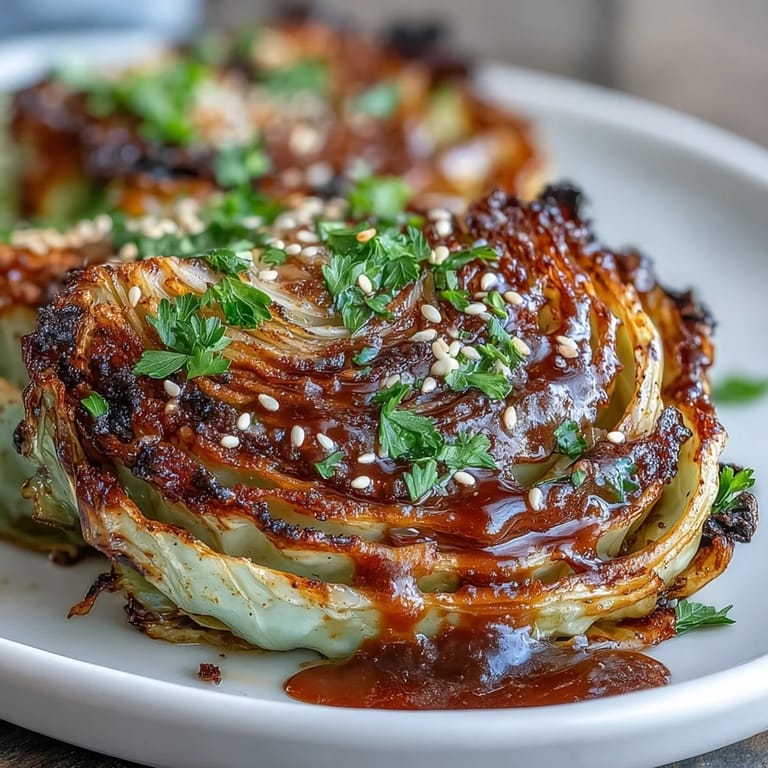
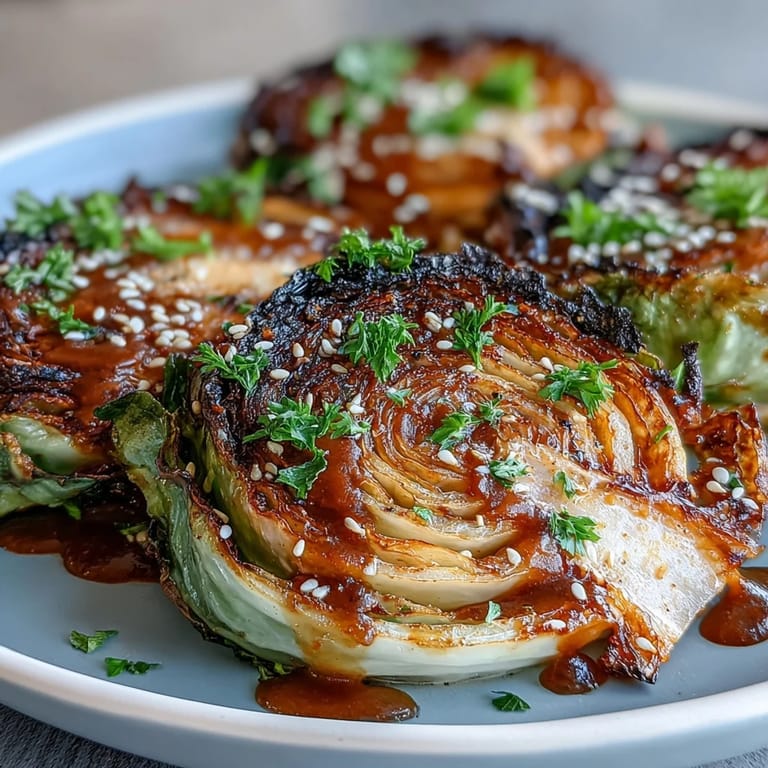
- Transfer your roasted steaks to a platter, drizzle generously with the tahini sauce, then scatter the fresh parsley, toasted sesame seeds, and a few lemon wedges around the plate. Serve while the cabbage is still warm so the sauce stays silky.
 Save to Pinterest
 My neighbor once asked what I was cooking because the aroma drifting over the fence was so good, and when I told her it was just cabbage, she didn't believe me until she tasted it. In that moment, I realized this dish does something magical—it turns something you'd never expect into something people actually crave. It's one of those simple recipes that reminds you cooking doesn't have to be complicated to be memorable.
How to Pick the Perfect Cabbage
The cabbage you choose sets the tone for everything that follows. When you're at the market, pick up a few and feel their weight—a good one should feel dense and heavy, with leaves that don't give when you squeeze gently. Skip any with cracks, soft spots, or that have been sitting out too long; a fresh cabbage will give you thick, crisp steaks that hold their shape beautifully under heat. Green cabbage is ideal here because it has a slightly sweeter, milder flavor than red or savoy varieties, though you can absolutely experiment once you've made this a few times.
The Tahini Sauce Secret
The tahini sauce is honestly just as important as the roasted cabbage itself, so don't treat it like an afterthought. I learned this the hard way after making beautiful caramelized steaks and drowning them in a thick, gloppy sauce that overpowered everything. The key is balance—you want enough lemon juice to brighten it, enough garlic to give it character, and enough water to make it flow like silk across the plate. Taste as you go, and remember that a little salt goes a long way because tahini needs it to really shine.
Serving Ideas and Variations
Cabbage steaks are genuinely flexible in how you approach them. Serve them warm straight from the oven as a vegetable-forward main with some grains on the side, or use them as an elegant side to grilled fish or roasted chicken. You can get creative with the seasonings too—a pinch of sumac adds tartness, zaatar brings herbal warmth, and a tiny shake of chili flakes gives an unexpected kick. The tahini sauce is the constant that ties everything together, but the base is your playground.
- Try swapping cilantro or fresh mint for the parsley to completely change the flavor direction.
- Pomegranate molasses drizzled over the tahini adds brightness and a subtle tang that people always ask about.
- If you have guests with nut allergies, you can skip the sesame seeds or replace tahini with a creamy cashew sauce made the same way.
 Save to Pinterest
 There's something deeply satisfying about feeding people food that surprises them in the best way—something they didn't expect to love, plated simply and honestly. This dish does exactly that, every single time.
Recipe Questions & Answers
- → How do I cut cabbage into steaks?
Trim off any tough outer leaves, then slice the entire head horizontally into 1-inch thick rounds. You'll typically get 4-5 steaks per large cabbage. Keep the core intact—it helps hold each slice together during roasting.
- → Can I make this ahead?
Roast the cabbage up to a day in advance and reheat at 400°F for 10 minutes. Store the tahini sauce separately in the refrigerator and whisk in a splash of water before serving to restore its creamy consistency.
- → What can I use instead of tahini?
Greek yogurt thinned with lemon makes a lighter alternative. For nut-free options, try cashew butter or sunflower seed butter blended with lemon and garlic. Each brings a slightly different flavor profile but still delivers creaminess.
- → Why is my tahini sauce clumping?
This is normal—keep whisking vigorously. The tahini will seize up before it smooths out. Adding cold water gradually while whisking helps emulsify the sauce into a silky drizzle. If it's too thick, add more water one tablespoon at a time.
- → Can I use red cabbage instead?
Absolutely. Red cabbage works beautifully and adds vibrant purple color to your platter. Note that it may take slightly longer to tenderize and will turn blueish when cooked, which the acidic tahini helps balance.