 Save to Pinterest
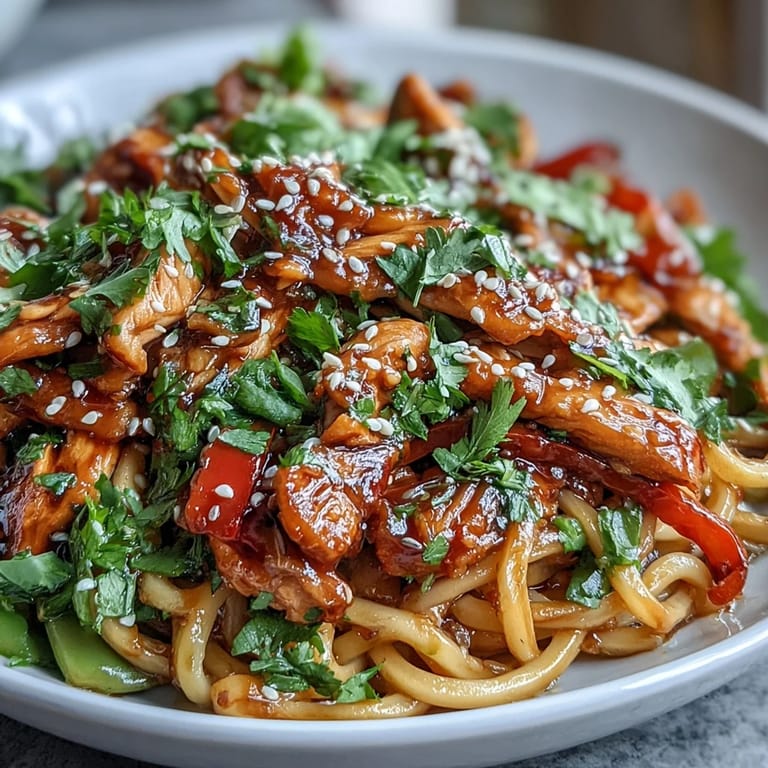
 There's something about the sound of a wok hitting high heat that makes me feel like I'm cooking something worthwhile. I stumbled onto this sesame chicken noodle bowl one weeknight when I had exactly three vegetables in my crisper drawer and a craving for something that tasted restaurant-quality but didn't require leaving the house. The magic turned out to be that brown sugar and sesame oil combination—it's the kind of sauce that makes you wonder why you ever ordered takeout. Now my kitchen smells like toasted sesame and ginger at least twice a week.
I made this for my sister on a random Tuesday, and she literally asked for the recipe before she finished eating. That doesn't happen often with her—she's a picky eater who usually leaves things on her plate. Watching someone genuinely enjoy something you've made, without being asked out of politeness, is honestly one of the small joys of cooking at home.
Ingredients
- Boneless, skinless chicken breast or thighs (500 g): Thighs stay juicier if you're not careful with timing, but breasts cook faster and won't leave you with that watery pan situation.
- Dried udon, soba, or rice noodles (250 g): Each one brings a different texture—udon is chewy, soba is nutty, rice noodles are delicate; pick based on your mood.
- Red bell pepper (1): The bright color matters here, both visually and for that crisp-sweet flavor that balances the sauce.
- Carrot (1 medium): Julienned, not chunked—thin pieces cook evenly and feel less heavy in the bowl.
- Sugar snap peas (100 g): These stay firm and slightly sweet, which is exactly what you want when everything else is getting saucy.
- Spring onions (2): Fresh and last-minute; they add a sharpness that stops the whole thing from feeling too sweet.
- Low-sodium soy sauce (60 ml): The backbone of the sauce—don't skimp here, but low-sodium keeps you from over-salting.
- Brown sugar (2 tbsp): This is what gives the sauce body and that glossy finish that makes people think you tried harder than you did.
- Toasted sesame oil (1 tbsp): The real deal, not the cooking kind; a little goes a very long way.
- Rice vinegar (1 tbsp): Cuts through the richness and keeps the sauce from tasting one-dimensional.
- Fresh ginger (2 tsp, grated): Use a microplane if you have one—it makes a difference in how it distributes through the sauce.
- Garlic cloves (2, minced): Fresh is non-negotiable here; jarred garlic will leave your kitchen smelling like regret.
- Cornstarch (1 tsp, optional): Only if your sauce looks too thin; this is your safety net.
- Toasted sesame seeds (2 tbsp): Don't brown them yourself unless you enjoy the smell of burnt sesame lingering in your kitchen for days.
- Fresh coriander or cilantro: The brightness at the end that makes everyone ask what that flavor is.
- Lime wedges (optional): A squeeze at the table changes everything, but people often forget to use them.
Tired of Takeout? 🥡
Get 10 meals you can make faster than delivery arrives. Seriously.
One email. No spam. Unsubscribe anytime.
Instructions
- Cook your noodles first:
- Follow the package directions, then drain and run cold water over them immediately so they don't clump into a solid mass. This is the step that's easy to rush, but it matters.
- Mix your sauce while everything's still dry:
- Whisk together soy sauce, brown sugar, sesame oil, rice vinegar, ginger, and garlic in a small bowl. Add cornstarch only if you're worried about the sauce being too thin—sometimes you don't need it.
- Get your pan screaming hot:
- Medium-high heat, a splash of oil, and wait for it to shimmer before you add the chicken. That sizzle when the chicken hits the pan is how you know you're doing it right.
- Cook the chicken until it's no longer thinking about being pink:
- About 4-5 minutes for thin slices, but keep an eye on it—overcooked chicken is one of those mistakes that ruins an otherwise good meal. Set it aside on a clean plate.
- Stir-fry the vegetables until they're tender but still have some fight in them:
- That's 2-3 minutes in the same pan, maybe a little more oil if it's looking dry. You want them to taste like they were cooked, not like they were steamed.
- Bring everything back together:
- Return the chicken to the pan, pour in your sauce, and toss like you're actually tossing and not just stirring. Let it simmer for a minute until the sauce thickens slightly and coats everything like a glaze.
- Add noodles and spring onions:
- Toss everything well so the hot noodles absorb some of the sauce. This is where it stops being ingredients and becomes a proper bowl.
- Plate and finish:
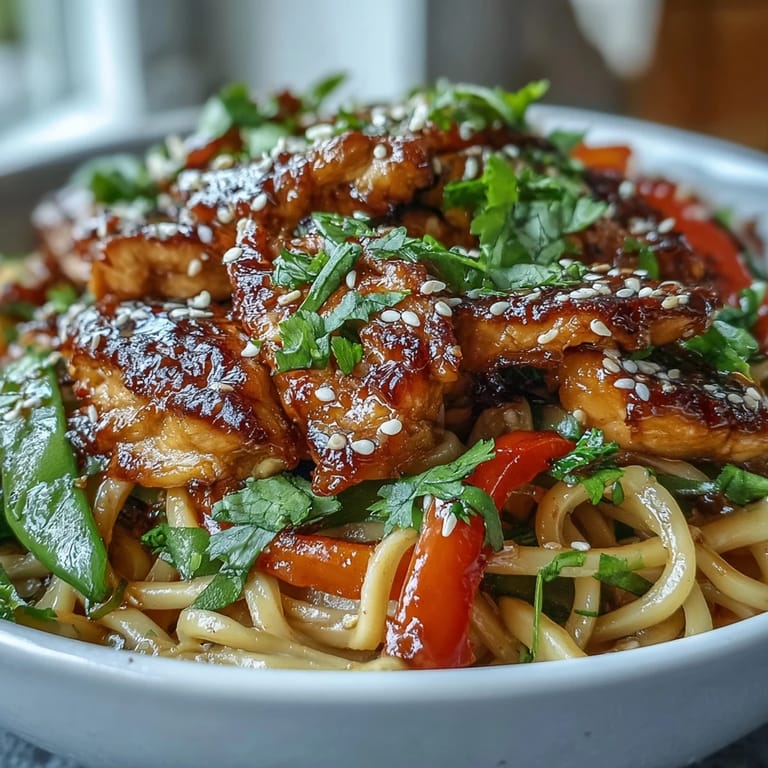
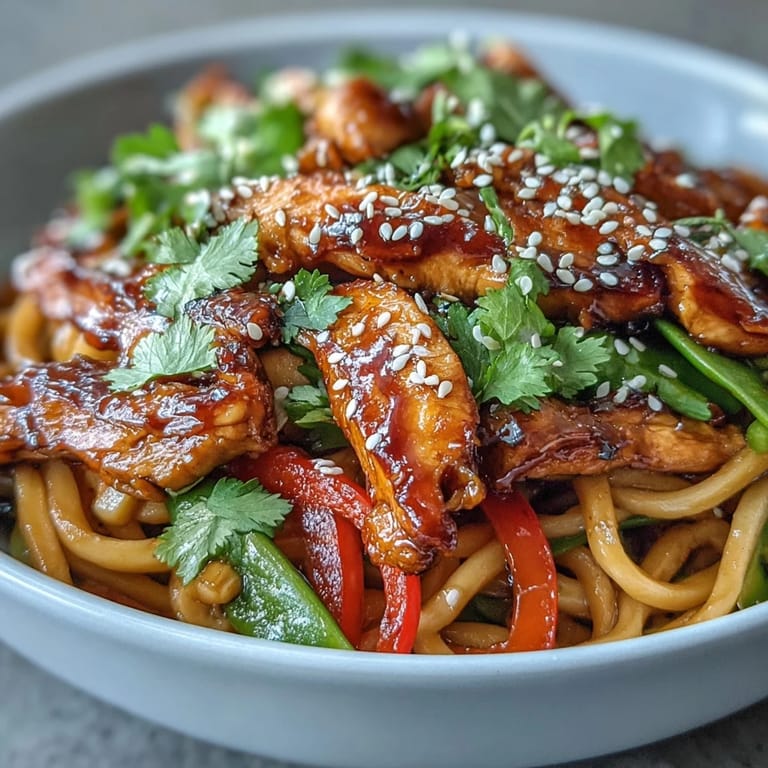
- Divide among bowls, scatter sesame seeds and cilantro on top, and set out lime wedges if people actually want them.
 Save to Pinterest
 My roommate asked why I was making this again—I'd already made it twice that month—and I realized it's because it's reliable in a way that matters. There's no guessing, no worrying that something's going to turn out grainy or broken or disappointing. It's the kind of recipe that teaches you that cooking doesn't have to be complicated to be good.
Why Sesame Changes Everything
Sesame oil is polarizing—some people catch one whiff and close their eyes like it's the best thing they've ever experienced. Others recoil like it's burnt rubber. But once you understand that a little goes a long way and it's meant to be a supporting player, not the main event, it stops being scary. It transforms a basic soy-and-brown-sugar situation into something that feels like it came from a restaurant kitchen. Start with the tablespoon, taste the sauce, and resist the urge to double it. You can always add more next time, but you can't take it back.
Variations That Actually Work
The beautiful thing about this bowl is that it's genuinely flexible without tasting like you tried to use up random pantry items. Tofu works if chicken isn't your thing—just press it first and treat it a little more gently in the pan since it breaks easily. Broccoli, mushrooms, baby bok choy, or asparagus all slot in seamlessly without throwing off the flavor balance. If you're feeling adventurous, a teaspoon of chili flakes adds heat without drowning out the sesame and ginger. Brown sugar is adjustable too—pull back if you like things less sweet, or add a bit more if you're making this for someone with a bigger sweet tooth than you have.
The Small Details That Matter
Knife skills matter here because thin chicken slices and julienned carrots cook at the right speed and eat more pleasantly than chunky pieces. If you don't have a microplane for the ginger, a fine grater works, but a box grater will leave you with ginger strings that are kind of unpleasant. Spring onions added at the end stay fresh and sharp instead of wilting into the sauce. These aren't hard rules, but they're things I've learned by doing it wrong first.
- Always taste the sauce before you commit all the noodles to the pan—that's your moment to adjust sweetness or salt.
- If you're cooking for someone else, keep the lime wedges out and let them decide; not everyone wants citrus, and that's okay.
- Make extra sauce if you're feeding people who like their bowls really saucy—it's better to have too much than scrape the pan.
 Save to Pinterest
 This bowl has become the meal I make when I want to feel competent and when people I care about need feeding. It's proof that simple doesn't have to mean boring, and that good cooking is really just about paying attention to what you're doing.
Recipe Questions & Answers
- → Can I use different types of noodles?
Yes, you can substitute udon with soba, rice noodles, ramen, or even spaghetti. Adjust cooking time according to package instructions.
- → How do I make this dish vegetarian?
Replace the chicken with firm tofu cubes or tempeh. Press and cube the tofu, then pan-fry until golden before adding vegetables and sauce.
- → Can I make this gluten-free?
Use tamari instead of soy sauce and choose certified gluten-free noodles like rice noodles or buckwheat soba. Check all sauce ingredients for hidden gluten.
- → How spicy is this dish?
The base recipe is mild without heat. Add red pepper flakes, sriracha, or sliced fresh chili peppers during cooking if you prefer spicy food.
- → Can I prepare the sauce ahead of time?
Yes, whisk the sauce ingredients together and store in an airtight container in the refrigerator for up to 1 week. Shake well before using.
- → What vegetables work best in this bowl?
Bell peppers, carrots, and snap peas provide great crunch and color. You can also add broccoli, mushrooms, bok choy, snow peas, or baby corn.