 Save to Pinterest
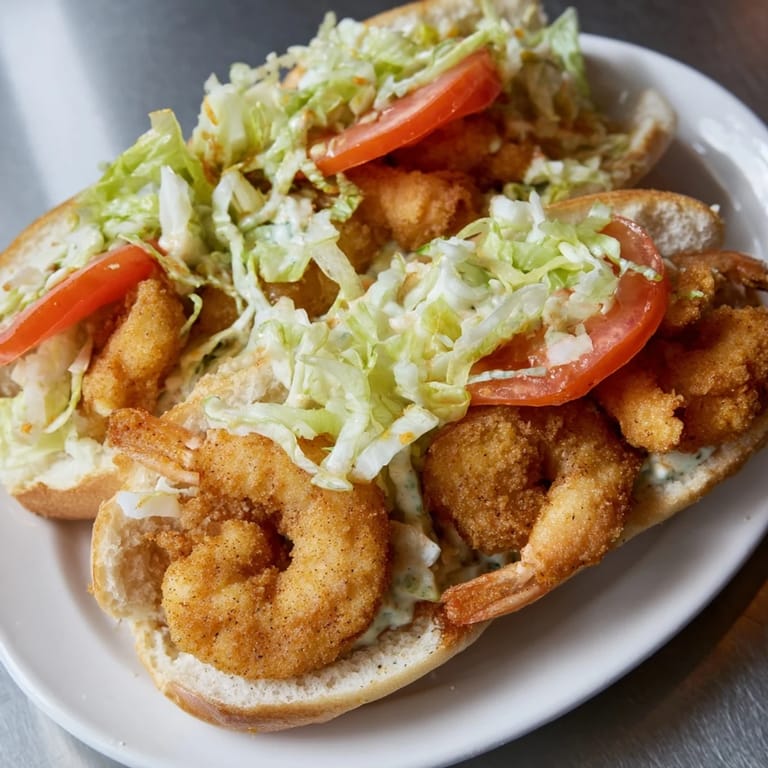
 My first po boy was a complete accident—I'd wandered into a cramped café in New Orleans on a sweltering afternoon, completely lost, and ordered whatever the counter worker recommended without really thinking. One bite of that crispy shrimp sandwich and I understood why people get emotional about food. The shrimp shattered between my teeth, the lettuce snapped cold and fresh, and the soft bread soaked up just enough mayo to feel decadent without drowning. I've been chasing that exact moment ever since.
I made this for friends on a Sunday when we were all craving something different, and watched their faces when they took that first bite—that quiet moment of surprise and satisfaction that happens before anyone says anything. One friend asked if I'd learned to cook in Louisiana, which made me laugh because I was just following my gut and a faded memory. Now they ask for it regularly, which feels like the best compliment.
Ingredients
- Large shrimp, peeled and deveined: One pound gives you enough for four generous sandwiches, and peeling them yourself is worth it for the fresher taste—frozen works fine, just thaw and pat completely dry before breading.
- All-purpose flour and cornmeal: The combination creates that signature crunch; the cornmeal adds a subtle texture and golden color that plain flour can't achieve alone.
- Cajun seasoning, paprika, garlic powder: These three carry the soul of the dish—use good quality spices since they're what make the shrimp taste alive, not just fried.
- Eggs and buttermilk: The buttermilk keeps the coating tender while the eggs help everything stick; this mixture is the secret to breading that doesn't slide off.
- Soft French rolls or hoagie buns: The bread matters more than you'd think—it should bend without tearing and cradle the filling without falling apart when the warm shrimp hits it.
- Iceberg lettuce, tomatoes, and mayonnaise: These are your texture and flavor anchors; the cool crispness of the lettuce and tomato brightness offset the richness beautifully.
- Vegetable oil: You need enough to fully submerge the shrimp, and keeping it at exactly 350°F makes the difference between golden and greasy.
Tired of Takeout? 🥡
Get 10 meals you can make faster than delivery arrives. Seriously.
One email. No spam. Unsubscribe anytime.
Instructions
- Prep your shrimp:
- Pat them completely dry with paper towels—any moisture will cause the oil to splatter and prevent proper crisping. This small step changes everything.
- Make your coating mixture:
- Whisk the eggs and buttermilk together in one bowl until smooth, then combine all your dry ingredients in another. Having both ready before you start breading keeps you from rushing.
- Bread the shrimp:
- Dip each shrimp into the egg mixture, then roll it in the flour-cornmeal blend, making sure every surface gets coated. A good thick coating is what delivers that satisfying crunch.
- Heat your oil:
- Use a thermometer if you have one—350°F is the sweet spot where shrimp cooks through without absorbing too much oil. Let the oil heat for a few minutes before you start frying.
- Fry in batches:
- Don't crowd the pan; give each shrimp space to cook evenly, about 2 to 3 minutes until they're golden and the coating sounds crispy when you move them. A slotted spoon or tongs works best for flipping and removing them.
- Drain and rest:
- Transfer the finished shrimp to a paper towel-lined plate where they can breathe and stay crispy while you finish cooking the rest.
- Toast your rolls:
- Slice them open lengthwise, leaving a hinge if possible, then warm them briefly—a soft toasted surface helps them hold the fillings without getting soggy.
- Build your sandwich:
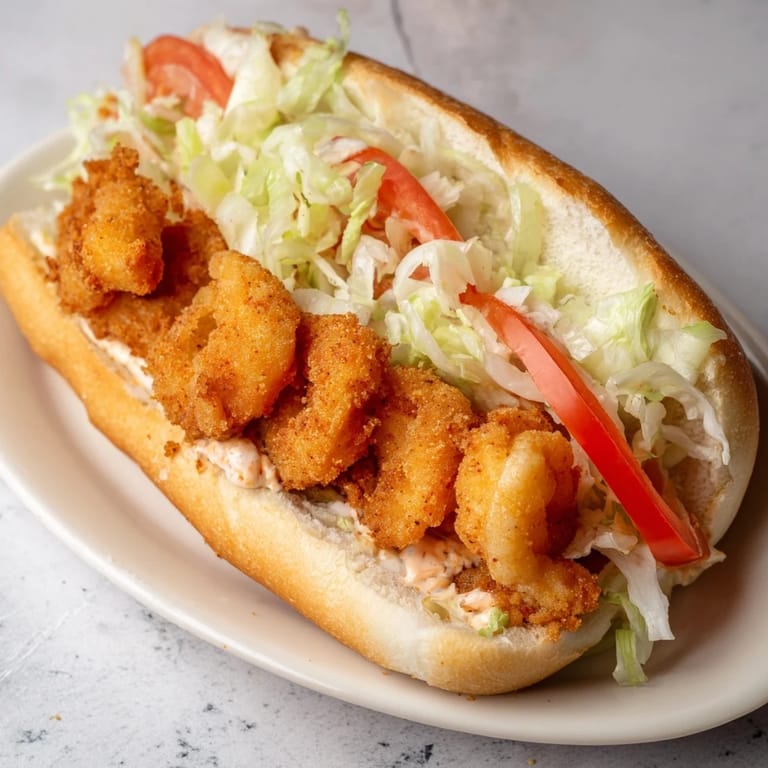
- Spread mayo on both sides of the warm roll (mix in hot sauce if you want a kick), then layer lettuce, tomatoes, and those golden shrimp. The warmth of the shrimp will slightly soften the lettuce while keeping everything crisp.
- Serve immediately:
- Don't wait—eat these right away when the shrimp is still warm and the bread is still soft, with lemon wedges on the side for a bright finish.
 Save to Pinterest
 I'll never forget my neighbor appearing at my kitchen window mid-fry, drawn by the smell of something incredible, and ten minutes later we were eating at my porch table with cold drinks and no hurry. That's when I realized a good po boy isn't just lunch—it's an invitation to slow down and actually taste something.
Building the Perfect Sandwich
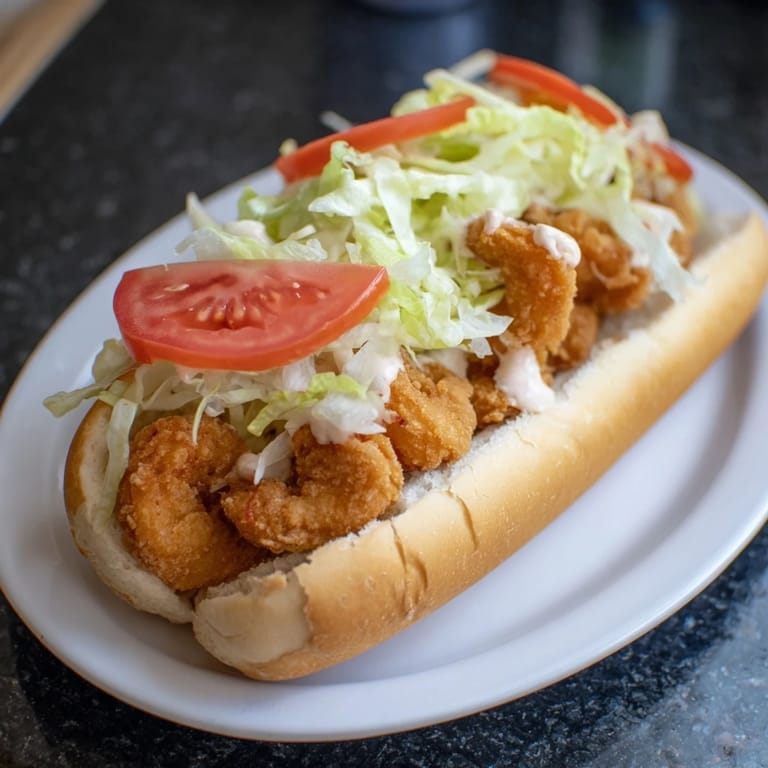
Assembly might seem simple, but there's a real craft to layering a po boy so every bite contains shrimp, lettuce, tomato, and that creamy mayo. The order matters—lettuce first acts as a barrier between the hot shrimp and the bread, preventing sogginess, while the tomato juice and mayo create a flavor bridge that ties everything together. I learned this through trial and error, mostly error, but once you nail the sequence, you can't go back to random layering.
The Heat and Spice Game
The Cajun seasoning blend does heavy lifting here, giving the shrimp a warmth that isn't quite hot—it's more like a friendly pepper that whispers rather than shouts. Some people add hot sauce to the mayo, which transforms the sandwich into something bolder; others skip it entirely for a cleaner taste. The beauty is that the base recipe is forgiving enough to adapt to what you're craving on any given day, which is why I keep making it.
Oil, Temperature, and Texture
Deep frying intimidates some people, but once you understand that it's just about maintaining heat and not overcrowding, it becomes almost meditative. The shrimp hits hot oil and you hear it sizzle, watch it curl and turn golden, and know exactly when to pull it out before it gets tough. This is where the texture magic happens, and once you taste the difference between properly fried and overdone, you'll be precise about your timing every single time.
- If you don't have a thermometer, test the oil temperature with a single breadcrumb—it should sizzle immediately and brown in about 30 seconds.
- Work in batches of 5 or 6 shrimp so the oil temperature stays stable and each piece fries evenly without competing for space.
- Keep finished shrimp warm in a low oven while you fry the rest, so everyone gets a hot sandwich at the same time.
 Save to Pinterest
 There's something about a po boy that feels both casual and celebratory at once, like you're treating yourself without overthinking it. I hope this one brings you that same unexpected joy it brought me.
Recipe Questions & Answers
- → What type of shrimp works best?
Large, peeled, and deveined shrimp are ideal for even frying and optimal texture.
- → How is the shrimp coated before frying?
Shrimp are dipped in an egg and buttermilk mixture, then dredged in a seasoned flour and cornmeal blend for a crispy crust.
- → What oil temperature is recommended for frying?
Heat vegetable oil to 350°F (175°C) to ensure the shrimp cooks quickly and develops a golden, crispy exterior.
- → Can the sandwich be customized?
Yes, add hot sauce to mayonnaise for extra heat or substitute remoulade sauce for a tangier flavor.
- → What are good side dishes to serve?
Classic kettle chips or French fries complement the sandwich’s rich flavors well.
- → Are there alternatives to deep-frying?
For a lighter option, shrimp can be oven-baked or air-fried without sacrificing much crispness.