 Save to Pinterest
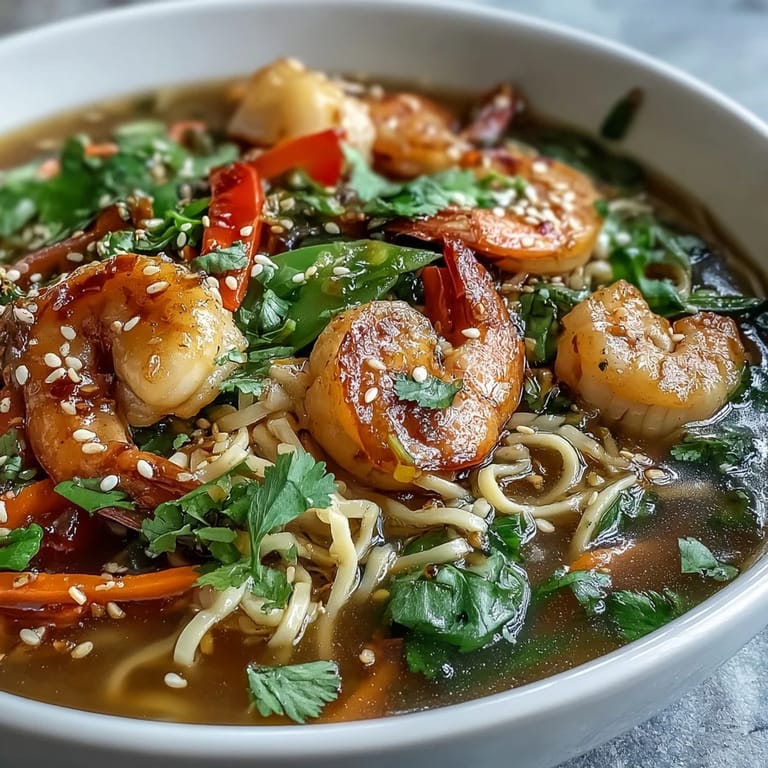
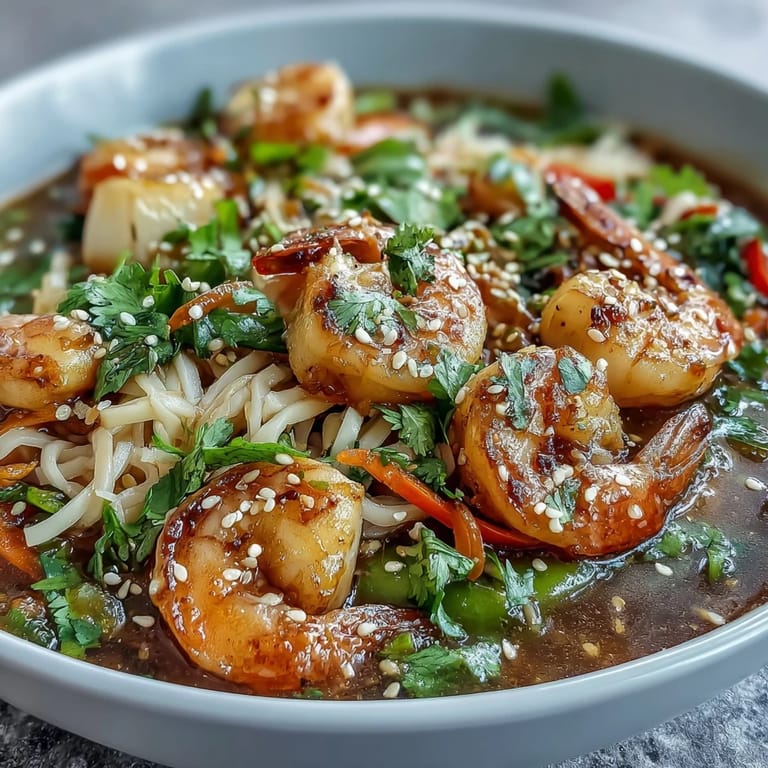
 There's something about the sound of seafood hitting hot broth that signals you're about to eat something special. I discovered this noodle bowl on a rainy Tuesday when I had shrimp and scallops defrosting on the counter and suddenly craved something warm and complex. The magic isn't in any single ingredient—it's in how the broth wraps around everything, turning a simple bowl into something that tastes like you've spent hours on it when really you haven't. My kitchen filled with the smell of ginger and sesame within minutes, and I knew I'd be making this constantly.
I made this for my sister when she visited last fall, and she sat at my kitchen counter watching the whole process unfold with this look of genuine curiosity. When I added the seafood to the simmering broth and it turned opaque in under three minutes, she laughed and said 'that's it?' but then tasted it and went completely quiet. That quiet moment—where someone's fork just stops moving—that's when you know you've nailed something.
Ingredients
- Large shrimp (200 g): Look for ones that are still slightly firm when raw; they'll cook through perfectly in 2-3 minutes without turning into rubber.
- Sea scallops (200 g): Pat them dry before cooking—moisture is your enemy here because it prevents that subtle sear and keeps them from tasting their best.
- Rice noodles or soba noodles (200 g): Rice noodles give you a delicate texture while soba adds an earthy note; rinse them cold so they don't clump together in the bowl.
- Carrot, julienned: The thin cut means it softens in the broth without disappearing, and it adds a natural sweetness that balances the umami.
- Red bell pepper, thinly sliced: Slicing thin lets it absorb flavor while staying crisp enough to give you something to bite.
- Snow peas (100 g): Add these at the last moment so they stay bright and snappy instead of becoming sad and limp.
- Baby bok choy, halved: It wilts into the broth beautifully and its mild flavor doesn't compete with the seafood.
- Spring onions, sliced: Reserve most for garnish; the green parts especially taste better raw than cooked.
- Fresh ginger, grated (1 tablespoon): Grate it right before cooking so you get all those sharp, zingy oils that make the broth come alive.
- Garlic cloves, minced (2): The garlic blooms in the hot oil and becomes sweet and mellow instead of harsh.
- Low-sodium broth (1 liter): Low-sodium lets you control the salt level and taste the other flavors instead of just salt.
- Soy sauce (2 tablespoons): The backbone of your broth—use good soy sauce if you have it because you'll definitely taste the difference.
- Fish sauce (1 tablespoon): This is the secret handshake ingredient that makes everything taste more like itself without anyone being able to name what they're tasting.
- Sesame oil (1 tablespoon): Use toasted sesame oil for its rich, nutty flavor; it's too intense to cook in, so add it after the heat or use it as a starter like I do.
- Rice vinegar (1 tablespoon): A small splash brightens everything up and prevents the broth from tasting one-note.
- Chili paste (1 teaspoon, optional): Add this if you want heat, but taste first—some people's chili paste is spicier than others.
- Fresh cilantro leaves: Some people hate cilantro and that's their business, but if you love it, don't skip it.
- Toasted sesame seeds: Toast them yourself in a dry pan for about two minutes if you have the time; they taste more alive that way.
- Lime wedges: The acidity cuts through the richness and makes you want another spoonful immediately.
Tired of Takeout? 🥡
Get 10 meals you can make faster than delivery arrives. Seriously.
One email. No spam. Unsubscribe anytime.
Instructions
- Cook your noodles first:
- Follow the package timing exactly because overcooked noodles turn mushy in the hot broth. Rinse them under cold water so they don't stick together while you finish everything else.
- Start the aromatics:
- Heat the sesame oil in your pot over medium heat, then add ginger and garlic, stirring constantly for about a minute until the smell makes you close your eyes for a second. This is when your kitchen starts smelling like something special.
- Build the broth:
- Pour in the broth, soy sauce, fish sauce, and rice vinegar, then let it come to a gentle simmer—not a rolling boil, just quiet bubbles breaking the surface. Taste it now and adjust; this is your last chance to fix the seasoning before the vegetables go in.
- Add the vegetables:
- The carrots and bell pepper go in first since they need a few minutes, followed by the snow peas and bok choy about a minute later. You want them soft enough to surrender to your spoon but still with a whisper of structure.
- Introduce the seafood gently:
- Lower the shrimp and scallops into the simmering broth and watch them—they're done the moment they turn opaque, which is usually 2-3 minutes. Overcooked seafood tastes like rubber and that's a tragedy you can prevent by paying attention.
- Final taste and heat:
- Taste the broth one more time and add chili paste now if you want it, stirring until it dissolves. Remember you can always add more heat but you can't take it back.
- Assemble the bowls:
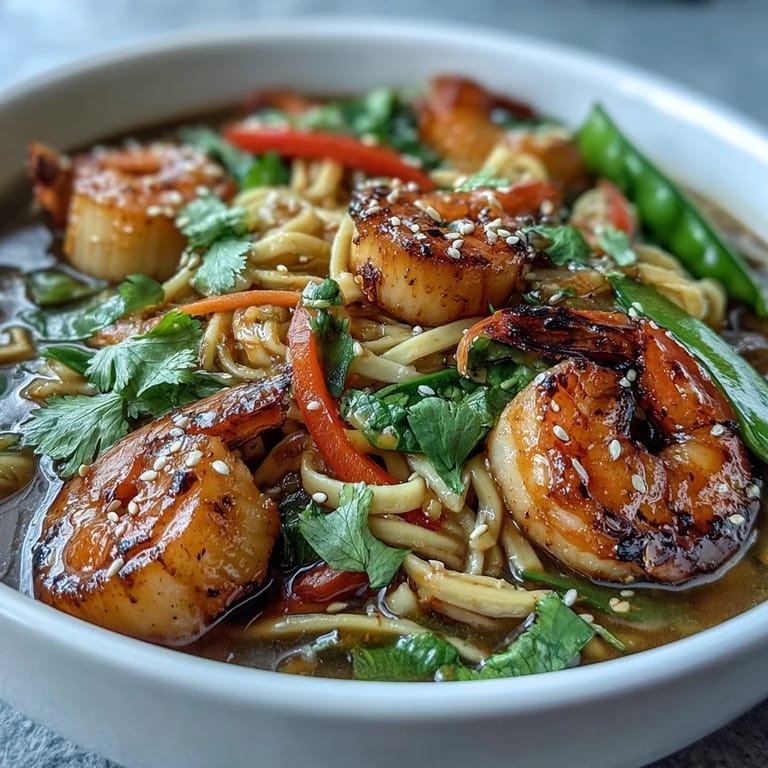
- Divide the noodles evenly among four bowls, then ladle the hot broth, seafood, and vegetables generously over top. Use a ladle; it keeps everything organized instead of you just pouring and hoping for balance.
- Garnish with intention:
- Scatter spring onions and cilantro over top, sprinkle sesame seeds so they're visible, and place a lime wedge on the rim so people remember to squeeze it. The finishing touches are what make someone say 'wow' instead of just 'this is good.'
 Save to Pinterest
 There's a moment right when you're serving this that someone will lean over the pot to smell it, and that moment is when you know you've created something that matters. It's not fancy or complicated, but it tastes like care, and that's actually the whole point.
Why This Bowl Works Every Time
The reason this dish never disappoints is because it relies on contrast—soft noodles against crisp vegetables, savory broth against bright lime, cooked seafood against raw garnishes. Each spoonful is different depending on how you angle your spoon, which keeps you engaged instead of just eating mindlessly. The broth is patient enough to wait for you while everything else cools slightly, so you never feel rushed.
Adjusting This Recipe to Your Mood
If you're feeling delicate, use slightly more broth and skip the chili paste entirely. If you want it hearty, use less broth so the noodles soak up more flavor, or add mushrooms and baby corn like the notes suggest. On days when you don't have scallops, shrimp alone is plenty; the seafood is there for elegance, but the broth does the real work. I've made this with canned shrimp in a pinch and no one knew—the broth hides a multitude of sins.
Small Details That Change Everything
The difference between this tasting like restaurant food and tasting like you tried too hard often comes down to not overthinking it. This is a dish that rewards confidence—add your ingredients, taste as you go, and trust that you know what good food tastes like. The best version is always the one you make for someone you actually want to feed.
- If your broth tastes flat, it's almost always because it needs more fish sauce, not salt—add a teaspoon and taste again.
- Cold noodles mixed with hot broth is intentional, not a mistake—it keeps the texture perfect instead of turning everything to mush.
- Make extra broth if you're feeding people who like to slurp the bottom of their bowl, which is basically everyone.
 Save to Pinterest
 This bowl is medicine for bad days and celebration for good ones, which is really all you need from food sometimes. Make it, eat it slowly, and let the warmth do its work.
Recipe Questions & Answers
- → Can I use different types of noodles?
Yes, you can substitute rice noodles with soba, udon, or egg noodles based on preference. Adjust cooking time according to package instructions.
- → How do I prevent overcooking the seafood?
Add shrimp and scallops during the final 2-3 minutes of simmering. Watch for opaque color and firm texture—remove immediately once cooked through.
- → Can I make this vegetarian?
Omit seafood and substitute with firm tofu cubes. Use vegetable broth instead of chicken broth for a fully plant-based version.
- → How spicy is this dish?
The base version is mild with gentle heat from ginger and garlic. Add chili paste to taste for extra spice, or serve with sriracha on the side.
- → Can I prepare components in advance?
Pre-cut vegetables and broth can be prepared a day ahead. Cook noodles and seafood fresh for best texture and flavor.