 Save to Pinterest
 The first time I made a Caprese salad, I wasn't even trying to impress anyone—just looking for something quick on a sweltering July afternoon when the farmers market had been generous with tomatoes. I sliced three perfectly blushed ones, grabbed some mozzarella from the fridge, and suddenly understood why Italians make this so often. It's not about technique or complexity; it's about letting good ingredients speak for themselves, and that's when cooking feels like the least amount of work and the most amount of magic.
I made this for a dinner party once and watched my friend eat three slices before she even sat down. She kept saying, 'I don't know why this tastes so good—it's literally just tomatoes and cheese,' but that's exactly the point. There's honesty in simplicity, and everyone at that table got it.
Ingredients
- Ripe tomatoes (3 large): Buy them when they smell sweet and yield gently to pressure; hothouse tomatoes won't cut it here since they carry all the flavor.
- Fresh mozzarella (8 oz): Seek out the kind packed in whey at a good cheese counter—it's softer, creamier, and makes all the difference compared to shrink-wrapped versions.
- Fresh basil (1/4 cup): Tear it by hand just before serving to avoid bruising the delicate leaves and losing those aromatic oils.
- Extra-virgin olive oil (2 tbsp): This is where quality truly matters since it's tasted directly; splurge if you can.
- Balsamic glaze (1–2 tbsp): The aged, syrupy kind drizzles beautifully and adds a subtle sweetness that balances the acidity of tomatoes.
- Sea salt and black pepper: Finish with both for brightness; freshly ground pepper makes a noticeable difference against the richness of the cheese.
Tired of Takeout? 🥡
Get 10 meals you can make faster than delivery arrives. Seriously.
One email. No spam. Unsubscribe anytime.
Instructions
- Slice and arrange:
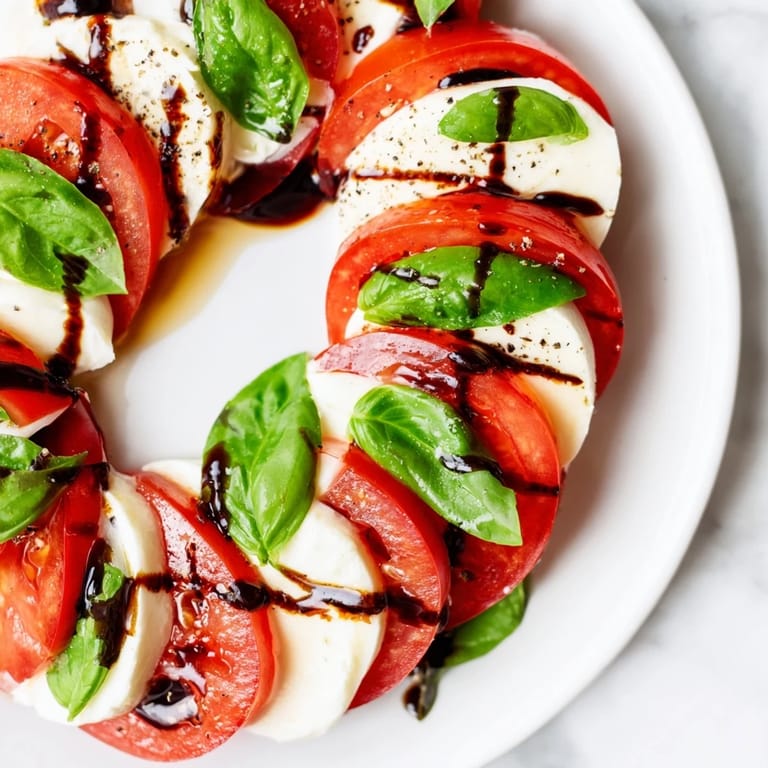
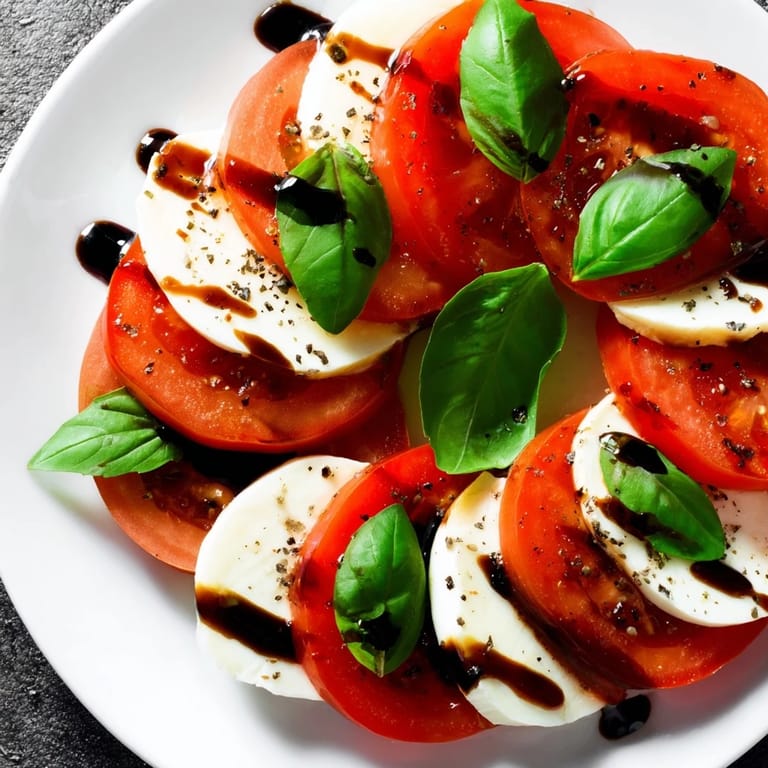
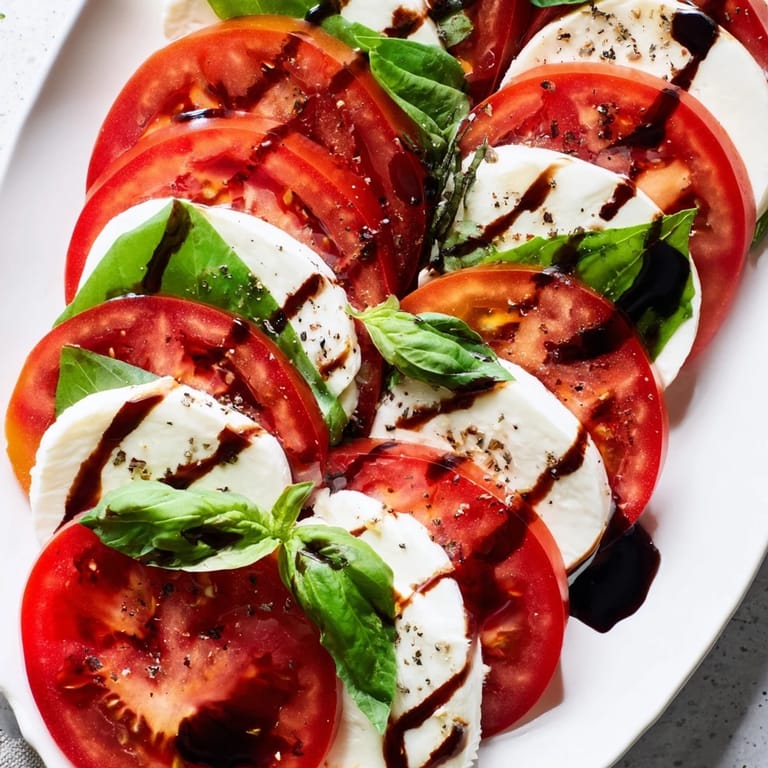
- Cut your tomatoes into thick rounds and lay them on a large platter alongside mozzarella slices, letting them overlap slightly like you're building something intentional. This isn't just plating—it's about creating pockets where the olive oil and balsamic can settle.
- Tuck in the basil:
- Slip fresh basil leaves between the tomato and mozzarella as you go, so every bite has a hit of that peppery, aromatic flavor. If you wait until the end, it'll just sit on top.
- Dress it:
- Drizzle olive oil in a thin stream across the whole platter, then follow with a light hand of balsamic glaze—you want a glossy sheen, not a puddle. The glaze should look like it's catching the light.
- Season and serve:
- Finish with a pinch of sea salt and a grind of fresh pepper, then bring it straight to the table while everything is still cool and the mozzarella hasn't begun to weep. This is best enjoyed immediately, not waiting.
 Save to Pinterest
 My grandmother once told me that a proper Caprese salad taught her more about cooking than any complicated recipe ever could. She meant that respecting ingredients and knowing when not to fiddle with them is its own kind of skill.
Choosing Your Tomatoes
The success of this salad hinges almost entirely on tomatoes, so don't rush this part. Heirloom varieties bring wild color variations and complex flavor that make the dish feel less like assembly and more like art. When you press a ripe tomato gently with your thumb and feel it give slightly, that's your signal it's ready. If it's hard, it'll taste like sadness no matter what you pair it with.
The Mozzarella Factor
Fresh mozzarella is a completely different ingredient from the kind on pizza. It should be soft, almost cloud-like, and it should pull apart with barely any pressure. If you can only find vacuum-sealed mozzarella, it'll still work, but it'll be denser and less of a revelation. Buy it the day you plan to make this salad if you can; mozzarella tastes best when it's freshest.
Making It Your Own
This recipe is a foundation, not a prison. Once you've made it the classic way, you know where to make subtle shifts. A handful of peppery arugula adds bite and texture, a whisper of balsamic vinegar instead of just glaze brings sharpness, even a light sprinkle of fleur de sel at the end elevates the whole thing into something more intentional. The beauty is that even small additions feel natural instead of cluttered.
- Scatter a few pine nuts or walnuts over the top for unexpected crunch.
- Add a thin shaving of red onion if you want a sharp, tangy note that cuts through the richness.
- Serve on a bed of greens to stretch it as a main course salad instead of a side.
 Save to Pinterest
 A Caprese salad reminds me that the best meals aren't always the ones that demand effort—sometimes they're the ones that celebrate what's already perfect. Serve it with crusty bread and a cold glass of Pinot Grigio, and you've got something that tastes like a memory before you've even finished eating.
Recipe Questions & Answers
- → What type of tomatoes works best?
Use ripe, in-season tomatoes for optimal sweetness and texture; heirloom tomatoes offer added color and flavor.
- → Can I substitute the mozzarella?
Fresh mozzarella is preferred for creaminess, but burrata or bocconcini can be alternatives depending on availability.
- → How should the balsamic glaze be applied?
Drizzle the balsamic glaze evenly over the layered salad for a sweet contrast that enhances the fresh ingredients.
- → Is this dish served cold or at room temperature?
It is best served immediately after assembly, either chilled lightly or at room temperature, to maintain freshness.
- → What are good accompaniments?
Pairs well with crusty bread and a crisp white wine such as Pinot Grigio to complement the bright flavors.