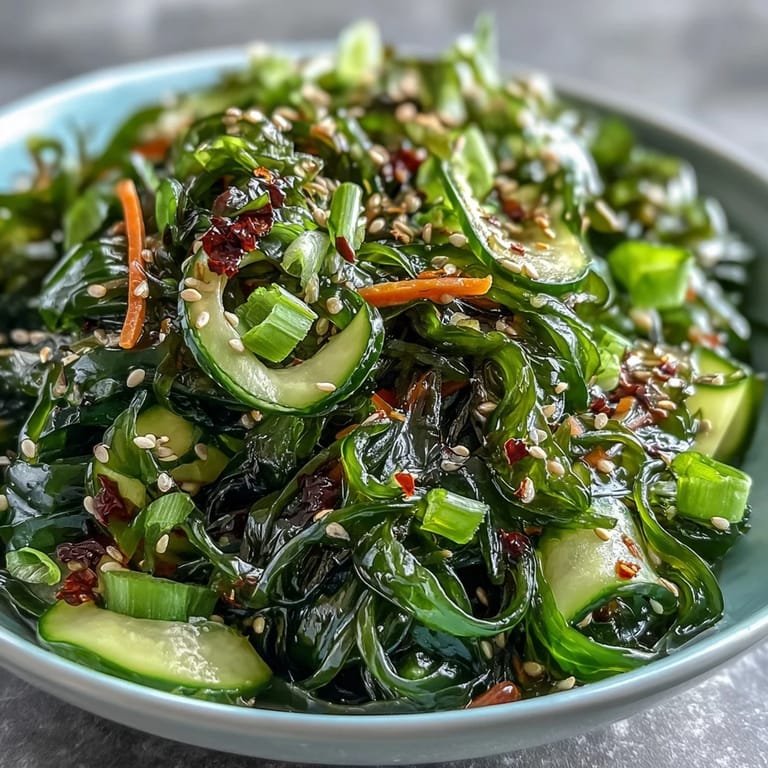
 Save to Pinterest
 I discovered seaweed salad on a quiet afternoon at a neighborhood Japanese market, standing in front of a glass case of prepared sides that gleamed under soft lighting. The vibrant green caught my eye first, but it was the aroma—briny, toasted, alive—that made me ask the shopkeeper about it. She smiled and explained it was wakame with sesame and ginger, simple but transformative, the kind of dish that tastes like the ocean decided to befriend your palate. That first bite changed how I thought about salads entirely.
I made this for a potluck once where I wasn't sure if seaweed salad would land with the crowd, but something shifted when people tasted it. Someone asked for the recipe, then another person came back for seconds, and suddenly I was explaining the umami depth of toasted sesame oil to folks who'd never given seaweed a second thought. It became the dish people specifically requested after that, the one that proved elegant simplicity often wins.
Ingredients
- Dried wakame seaweed: This is the star, and it deserves respect—quality matters here, so seek out brands that specify it's for salads rather than soups, as the texture differs.
- Cucumber: Choose one that's crisp and cool; it provides textural contrast and a subtle freshness that anchors the earthiness of the seaweed.
- Carrot: A julienne cut catches the dressing better than chunks and adds a gentle sweetness that plays beautifully with ginger.
- Scallions: These bring a bright, oniony sharpness that cuts through the richness of the sesame oil without overwhelming.
- Toasted sesame oil: Never use regular sesame oil for this; toasted is where the magic lives, delivering that deep, nutty flavor you can't replicate.
- Rice vinegar: Its subtle sweetness and lower acidity than distilled vinegar prevent the dressing from tasting harsh or one-dimensional.
- Soy sauce or tamari: If you're gluten-free, tamari is non-negotiable, but even if you're not, it's worth keeping around for its cleaner flavor profile.
- Fresh ginger: Freshly grated, not powdered, because the oils and bite make all the difference in lifting the entire dish.
- Maple syrup or honey: A touch of sweetness rounds out the dressing and balances the umami and spice.
- Sesame seeds: Toasted versions bring crunch and toastiness; raw ones taste flat by comparison.
Tired of Takeout? 🥡
Get 10 meals you can make faster than delivery arrives. Seriously.
One email. No spam. Unsubscribe anytime.
Instructions
- Rehydrate the seaweed gently:
- Place dried wakame in a bowl and cover with cold water, watching it bloom and soften over 7–10 minutes—don't rush this or use hot water, which can make it mushy and bitter. Once tender and expanded, drain thoroughly and give it a gentle squeeze to remove excess water without crushing the delicate fronds.
- Prepare your vegetables with intention:
- Slice the cucumber thin and uniform so it absorbs the dressing evenly, julienne the carrot for elegance and better dressing penetration, and slice scallions on the bias for a professional touch. Work calmly here; rushed knife work shows, and these vegetables deserve the small care you're giving them.
- Build the dressing as a ritual:
- In a separate bowl, whisk sesame oil, rice vinegar, soy sauce, freshly grated ginger, and maple syrup together, tasting as you go and adjusting the balance to your preference. This moment matters because a dressing that's right for you beats any recipe written in stone.
- Combine everything with a gentle hand:
- In your main bowl, toss the rehydrated seaweed with cucumber, carrot, and scallions, then pour the dressing over and fold everything together slowly and deliberately. Gentle tossing preserves the seaweed's delicate texture while ensuring every strand gets dressed.
- Finish and decide your timing:
- Transfer to your serving bowl and scatter sesame seeds and fresh cilantro on top for brightness and visual life. You can serve immediately for crispness or chill for 15–30 minutes to let flavors marry and deepen—both are right, just pick based on your mood.
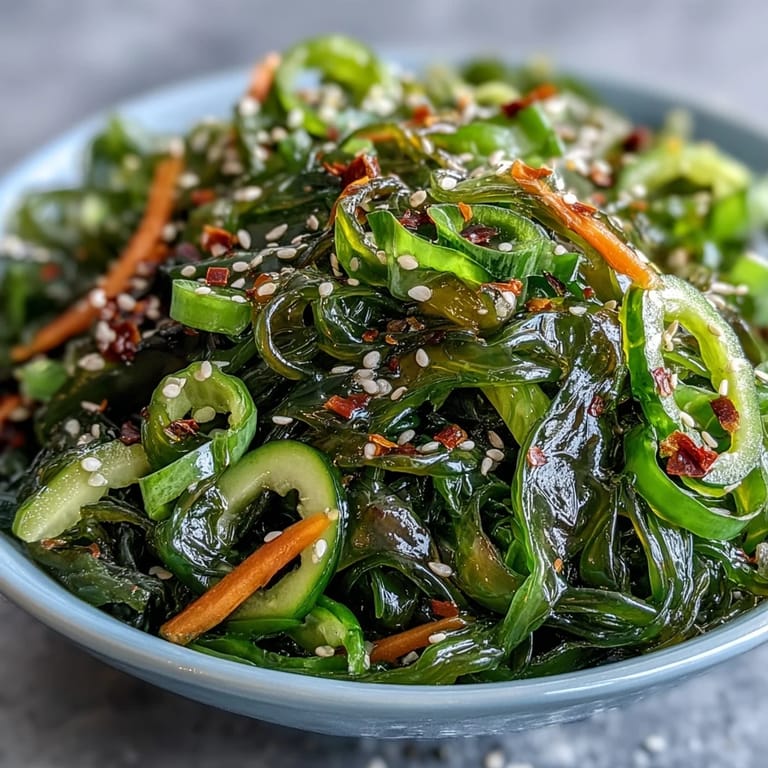 Save to Pinterest
 There's something almost meditative about this salad, the way it connects you to something ancient and ocean-rooted while tasting utterly contemporary. It taught me that simplicity doesn't mean boring; it means letting quality ingredients speak for themselves.
The Dressing, Where Everything Happens
The dressing is genuinely the reason this salad transcends being just seaweed tossed with vegetables. Sesame oil carries a warmth that feels almost floral, rice vinegar provides a gentle acidity that doesn't overwhelm, and fresh ginger adds a living quality that powdered ginger could never touch. When you whisk these together, you're not just mixing ingredients—you're creating a flavor bridge that makes seaweed taste less like the ocean and more like something comforting and craveable. I've learned to make this dressing first, taste it on its own, and adjust before it ever touches the salad, because a dressing that delights you by itself will make everything around it shine.
Texture and Temperature as Part of the Story
What makes this salad memorable is how temperature plays against texture—the cool crispness of cucumber and carrot meets the tender, slightly chewy seaweed, all dressed in something warm and fragrant from the toasted sesame oil. Chilling the finished salad for 15–30 minutes before serving deepens the flavors and adds a refreshing quality that feels especially welcome on warmer days. Serving it cold is traditional, but I've also served it at room temperature and found it equally lovely, just with a different energy entirely.
When to Serve and How to Love Leftovers
This salad shines as an appetizer before something warm and substantial, or as a refreshing side alongside grilled fish or chicken. It pairs unexpectedly well with cold sake, green tea, or even sparkling water with a wedge of lime. The leftover situation is honest: it keeps for up to 2 days in an airtight container, though the seaweed will gradually soften and the vegetables will yield more of their water, so day-one is always superior—but day-two leftovers are still worth eating, just with a different texture that some actually prefer.
- If you want extra crunch, add thinly sliced radish or shredded red cabbage just before serving, keeping them separate until the last moment.
- For those with gluten sensitivities, confirm your tamari and seaweed are genuinely gluten-free by reading packaging closely, since cross-contamination is real.
- Sesame seed allergies are common, so keep that in mind if you're serving this to others, and consider the dressing base if you need a nut-free alternative.
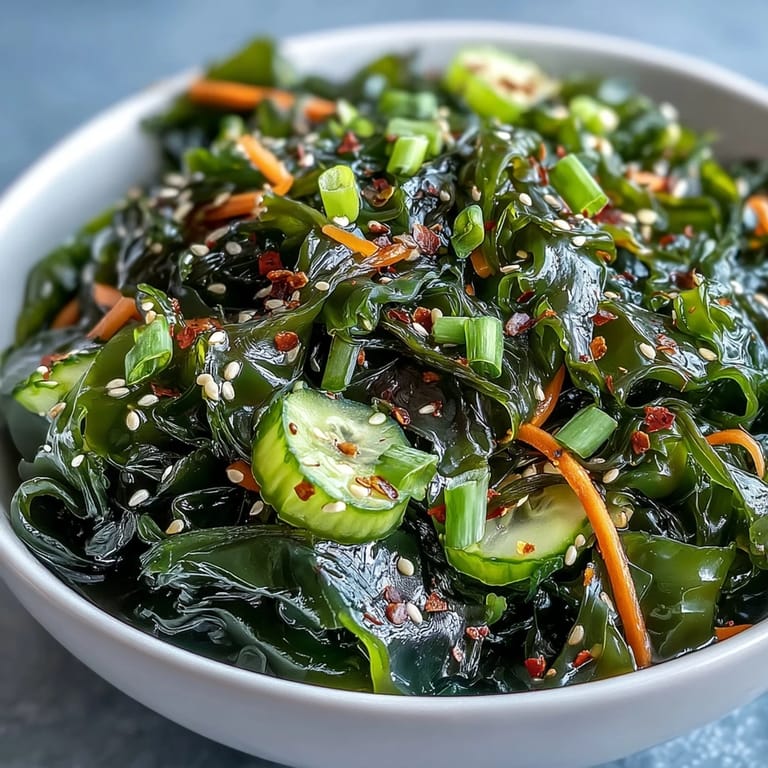 Save to Pinterest
 This seaweed salad taught me that the most nourishing meals are often the simplest ones, built on respect for ingredients and willingness to taste as you go. Keep making it, and it will become the dish you reach for without thinking, the one that feels like both a luxury and a comfort.
Recipe Questions & Answers
- → What type of seaweed works best?
Dried wakame seaweed is ideal for this preparation. It rehydrates quickly to become tender yet retains a pleasant texture. Soak for 7–10 minutes until fully expanded and soft.
- → Can I make this dish ahead?
Yes, prepare up to 2 days in advance and store in an airtight container. The flavors actually improve after chilling for 15–30 minutes, allowing the sesame-ginger dressing to permeate the seaweed.
- → Is this dish gluten-free?
Use tamari instead of regular soy sauce to make this completely gluten-free. Always verify packaged seaweed is certified gluten-free to avoid cross-contamination.
- → What vegetables pair well?
Beyond cucumber and carrot, try adding thinly sliced radish, shredded red cabbage, or bell peppers. These maintain crunch and complement the tangy dressing beautifully.
- → How do I adjust the flavor balance?
Increase maple syrup for more sweetness or add extra rice vinegar for acidity. The chili flakes can be adjusted to taste, or omitted entirely for a milder version.
- → What drinks complement this salad?
Chilled sake, green tea, or a crisp white wine pair wonderfully. The refreshing nature of the salad balances well with light, clean beverages.