 Save to Pinterest
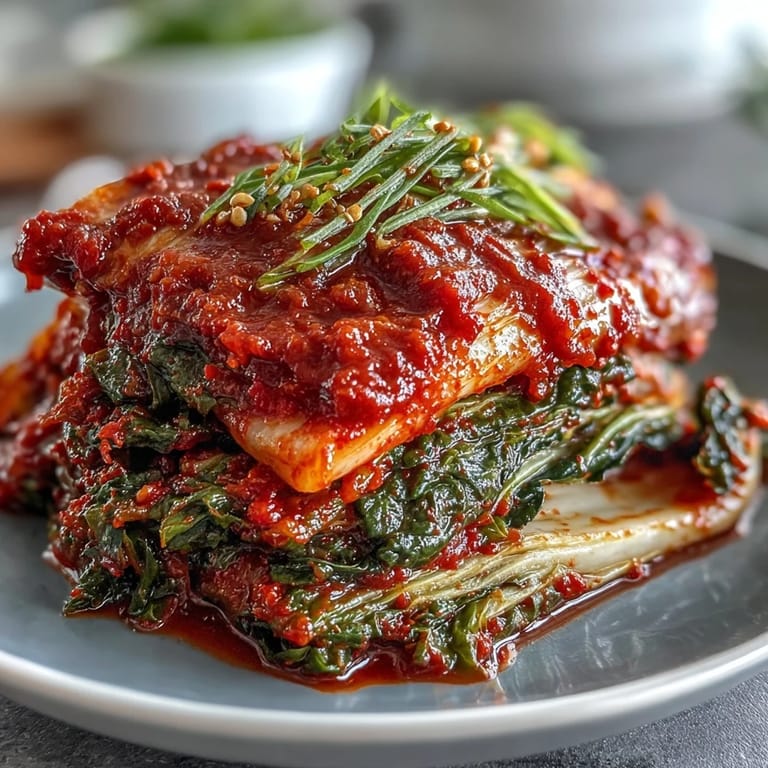
 Experience the bold and authentic taste of Korea with this traditional Kimchi. This vibrant, spicy, and tangy side dish is crafted from fermented napa cabbage and radishes, seasoned perfectly with garlic, ginger, and Korean red chili flakes. Beyond its incredible flavor, it is packed with probiotics and provides a satisfying crunch that complements any meal.
Save to Pinterest Preparing kimchi is a rewarding process that combines fresh produce with a patient fermentation period. Over the course of 2 to 7 days, the ingredients transform, developing deep flavors that become more intense and delicious over time.
Ingredients
Tired of Takeout? 🥡
Get 10 meals you can make faster than delivery arrives. Seriously.
One email. No spam. Unsubscribe anytime.
- 1 large napa cabbage (about 1.2 kg / 2.5 lbs)
- 1 medium daikon radish (about 200 g), julienned
- 4 scallions, sliced
- 1 medium carrot, julienned (optional)
- 80 g (1/3 cup) coarse sea salt
- 1.5 liters (about 6 cups) cold water
- 6 cloves garlic, minced
- 1 thumb-sized piece fresh ginger, peeled and minced
- 1 small onion, roughly chopped
- 3 tbsp fish sauce (or soy sauce for vegan)
- 1 tbsp sugar
- 3–5 tbsp Korean red chili flakes (gochugaru), to taste
- 2 tbsp rice flour
- 150 ml (2/3 cup) water
Instructions
- Step 1: Prep Cabbage
- Cut the napa cabbage lengthwise into quarters, then chop into 2-inch pieces.
- Step 2: Brining
- Dissolve sea salt in 1.5 liters cold water in a large non-reactive bowl. Add cabbage pieces, tossing to coat. Place a plate and a weight on top to keep submerged. Let sit for 2 hours, tossing every 30 minutes.
- Step 3: Rinsing
- Rinse the salted cabbage thoroughly under cold water 2–3 times to remove excess salt. Drain well.
- Step 4: Prepare Porridge
- To make the spice paste, whisk rice flour with 150 ml water in a small saucepan over medium heat until thickened (about 1–2 minutes). Let cool.
- Step 5: Blend Paste
- In a blender, combine cooled rice paste, garlic, ginger, onion, fish sauce (or soy sauce), and sugar. Blend until smooth. Stir in gochugaru to desired spice level.
- Step 6: Combine
- In a large bowl, combine drained cabbage, daikon radish, carrot (if using), and scallions. Add spice paste and, using kitchen gloves, massage thoroughly to coat all vegetables.
- Step 7: Packing
- Pack the kimchi tightly into clean glass jars or a fermentation crock, pressing down to eliminate air pockets. Leave at least 2.5 cm (1 inch) headspace at the top.
- Step 8: Initial Fermentation
- Seal and leave at room temperature out of direct sunlight for 1–2 days, burping the jars daily to release gas.
- Step 9: Storage
- Taste after 48 hours; once sour and tangy to your liking, store in the refrigerator. Kimchi will continue to ferment slowly and develop deeper flavors over several weeks.
Zusatztipps für die Zubereitung
When handling the spice paste, always use kitchen gloves to protect your skin from the gochugaru. During the fermentation process at room temperature, remember to burp your jars daily to allow gases to escape safely.
Varianten und Anpassungen
For a milder flavor, you can reduce the amount of gochugaru or add a grated apple or pear to the spice paste for natural sweetness. To make this recipe vegan, simply replace the fish sauce with soy sauce or a vegan fish sauce alternative.
Serviervorschläge
This kimchi can be served as a traditional banchan, incorporated into savory soups, or enjoyed alongside rice and eggs. For a perfect beverage match, pair it with a crisp lager or a glass of dry Riesling.
 Save to Pinterest
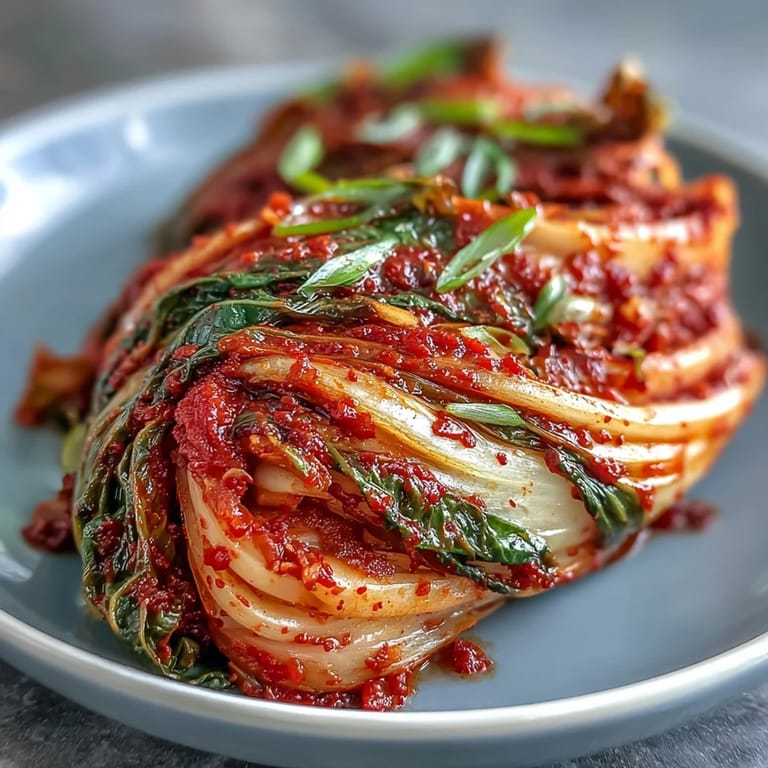
 Once your kimchi has reached its peak tanginess in the refrigerator, it becomes a versatile staple that enhances the flavor of countless dishes while providing a healthy boost to your diet.
Recipe Questions & Answers
- → How long does kimchi fermentation take?
Initial fermentation occurs at room temperature for 1-2 days. After achieving desired tanginess, refrigerate to slow fermentation. Flavors continue developing over several weeks, becoming more sour and complex.
- → Can I make kimchi without fish sauce?
Absolutely. Substitute fish sauce with soy sauce or vegan fish sauce alternatives. The kimchi remains delicious while accommodating plant-based diets. Adjust salt levels accordingly.
- → Why do I need to burp the kimchi jars?
Fermentation produces carbon dioxide gas. Burping releases pressure buildup, preventing jars from cracking or leaking. Open lids briefly once daily during room temperature fermentation.
- → How do I know when kimchi is ready?
Ready kimchi smells tangy and fermented, tastes sour with a pleasant crunch, and may show small bubbles. Taste after 48 hours and refrigerate when flavor balances spiciness and acidity to your preference.
- → What's the purpose of rice flour in the paste?
Rice flour creates a smooth base that helps bind spices and promotes beneficial bacterial growth during fermentation. The slight thickening ensures even coating of vegetables.
- → Can I adjust the spice level?
Certainly. Reduce gochugaru for milder kimchi or increase for extra heat. Adding grated apple or pear to the paste tempers spice while adding natural sweetness.